
Learn CPR. For Life™
Real.
Fast.
Guaranteed.
Nationally-accepted 2-year certification card from your own computer, tablet, or phone – in less than an hour!
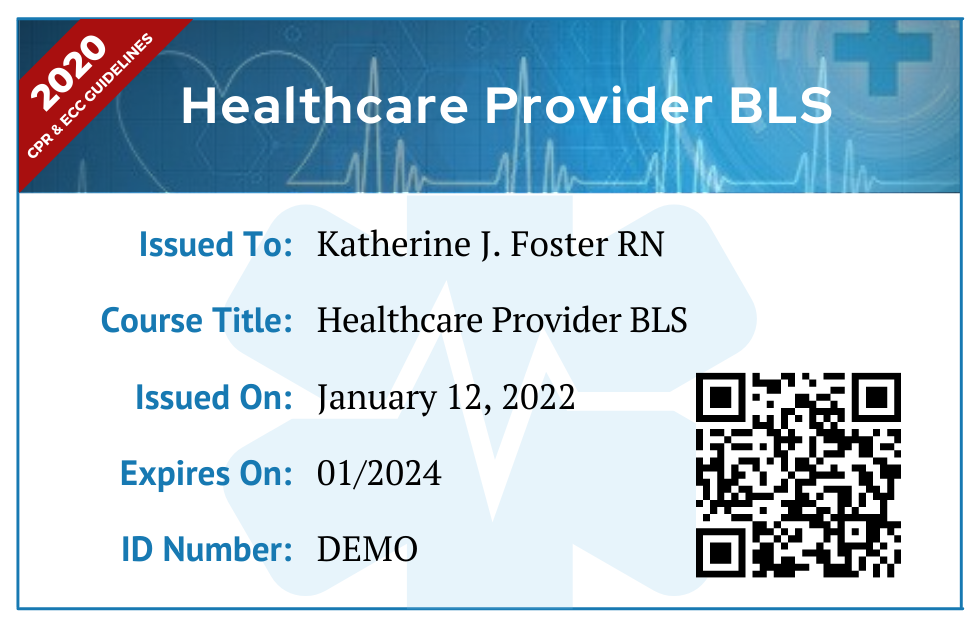
Based on most recent AHA ECC & CPR guidelines
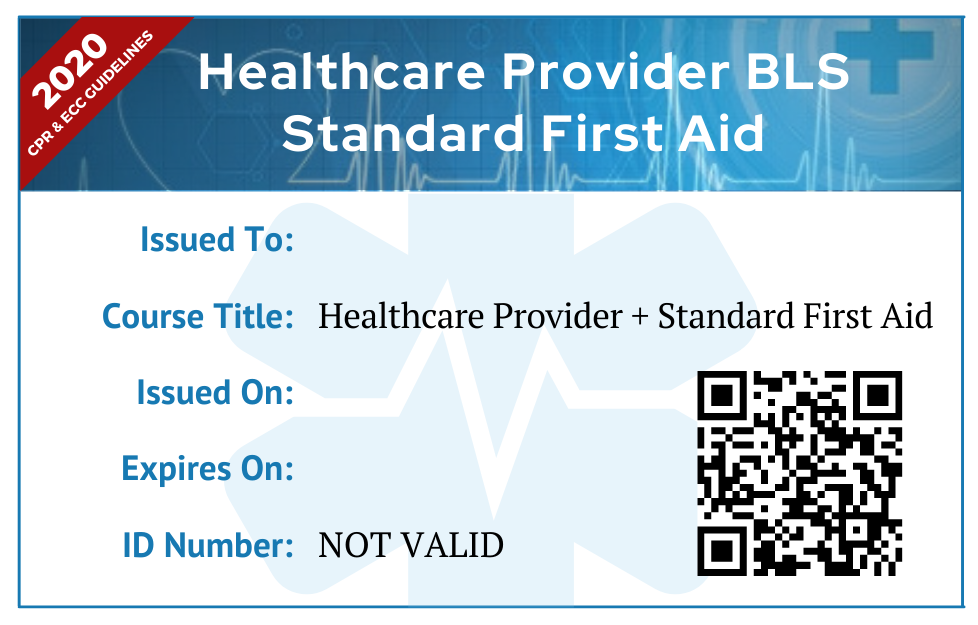
Your full name and professional accreditations (RN, MD, DDS, etc.)
Course certification designation
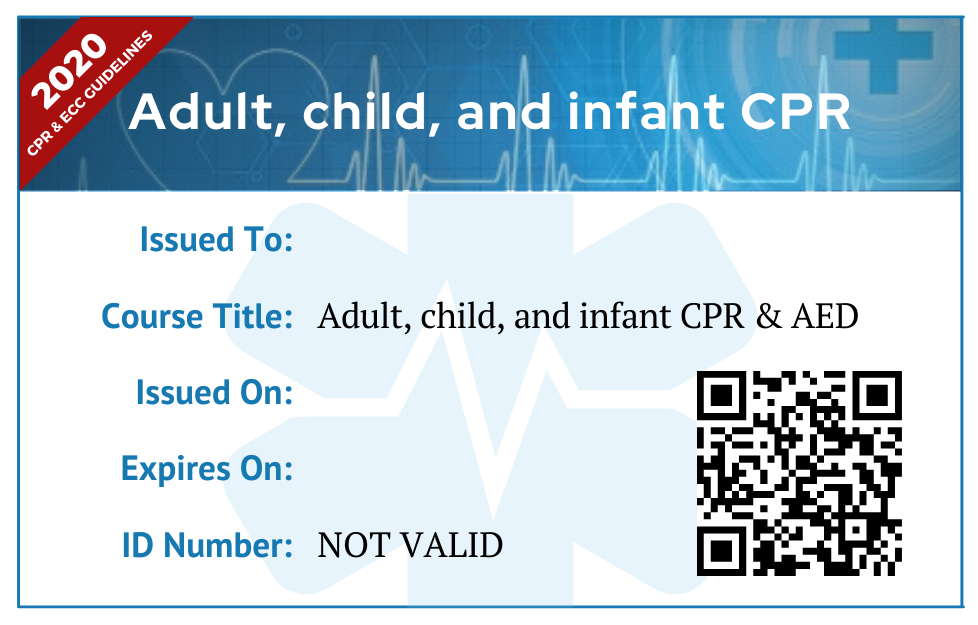
Course certification designation
Your certification card will remain valid for 2 years from issue
Your unique certification ID number
Your unique QR code will provide instant verification from any smart phone
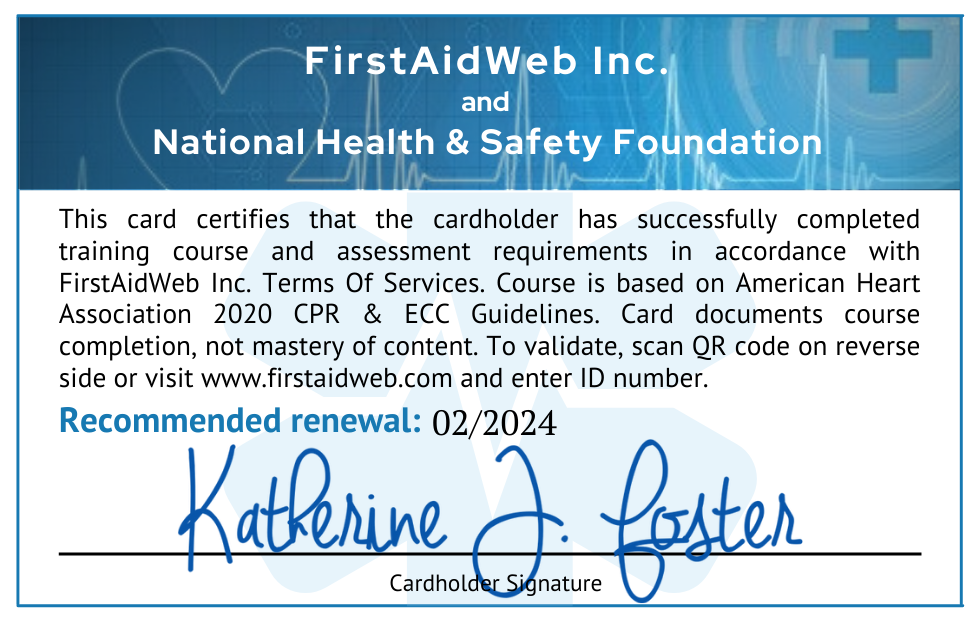
Certification card is issued exclusively by FirstAidWeb Inc. and NHSF
Renewal date reminder for your convenience
Your official signature
2020 AHA ECC & CPR GUIDELINES
Our free courses
Our always-free online courses are based on 2020 American Heart Association© CPR & ECC guidelines. No signup or registration required. So whether you're a complete novice or an expert needing to re-certify, we got you covered - study at your own pace, and get certified at your convenience.
99.9% acceptance
OUR CERTIFICATION CARDS
Accepted in more places around the world, FirstAidWeb certification is the standard-bearer of online CPR and BLS training and certification.

Order with full confidence that your new certification will be accepted or you will receive a full refund – 100% guaranteed!
- Fundamentals of CPR
- Adult Chain Of Survival
- Pediatric Chain Of Survival
- Adult 1-rescuer BLS/CPR
- Adult 2-rescuer BLS/CPR
- Adult bag-mask device
- Adult AED
- Infant and child 1-rescuer BLS/CPR
- Infant and child 2-rescuer BLS/CPR
- Pediatric bag-mask device
- Infant and child AED
- Adult choking rescue
- Infant and child choking rescue
- Opioid-related rescue
- Standard First Aid
- Bloodborne Pathogens
- Unrestricted/unlimited exam
- Certification available
- Fundamentals of CPR
- Adult Chain Of Survival
- Pediatric Chain Of Survival
- Adult 1-rescuer BLS/CPR
- Adult 2-rescuer BLS/CPR
- Adult bag-mask device
- Adult AED
- Infant and child 1-rescuer BLS/CPR
- Infant and child 2-rescuer BLS/CPR
- Pediatric bag-mask device
- Infant and child AED
- Adult choking rescue
- Infant and child choking rescue
- Opioid-related rescue
- Standard First Aid
- Bloodborne Pathogens
- Unrestricted/unlimited exam
- Certification available
- Fundamentals of CPR
- Adult Chain Of Survival
- Pediatric Chain Of Survival
- Adult 1-rescuer BLS/CPR
- Adult 2-rescuer BLS/CPR
- Adult bag-mask device
- Adult AED
- Infant and child 1-rescuer BLS/CPR
- Infant and child 2-rescuer BLS/CPR
- Pediatric bag-mask device
- Infant and child AED
- Adult choking rescue
- Infant and child choking rescue
- Opioid-related rescue
- Standard First Aid
- Bloodborne Pathogens
- Unrestricted/unlimited exam
- Certification available
- Fundamentals of CPR
- Adult Chain Of Survival
- Pediatric Chain Of Survival
- Adult 1-rescuer BLS/CPR
- Adult 2-rescuer BLS/CPR
- Adult bag-mask device
- Adult AED
- Infant and child 1-rescuer BLS/CPR
- Infant and child 2-rescuer BLS/CPR
- Pediatric bag-mask device
- Infant and child AED
- Adult choking rescue
- Infant and child choking rescue
- Opioid-related rescue
- Standard First Aid
- Bloodborne Pathogens
- Unrestricted/unlimited exam
- Certification available
- Fundamentals of CPR
- Adult Chain Of Survival
- Pediatric Chain Of Survival
- Adult 1-rescuer BLS/CPR
- Adult 2-rescuer BLS/CPR
- Adult bag-mask device
- Adult AED
- Infant and child 1-rescuer BLS/CPR
- Infant and child 2-rescuer BLS/CPR
- Pediatric bag-mask device
- Infant and child AED
- Adult choking rescue
- Infant and child choking rescue
- Opioid-related rescue
- Standard First Aid
- Bloodborne Pathogens
- Unrestricted/unlimited exam
- Certification available
- Fundamentals of CPR
- Adult Chain Of Survival
- Pediatric Chain Of Survival
- Adult 1-rescuer BLS/CPR
- Adult 2-rescuer BLS/CPR
- Adult bag-mask device
- Adult AED
- Infant and child 1-rescuer BLS/CPR
- Infant and child 2-rescuer BLS/CPR
- Pediatric bag-mask device
- Infant and child AED
- Adult choking rescue
- Infant and child choking rescue
- Opioid-related rescue
- Standard First Aid
- Bloodborne Pathogens
- Unrestricted/unlimited exam
- Certification available
Info Box 1
Subtitle
Rated 5 out of 5
April 18, 2024
It was great.
Diana Miranda
Rated 5 out of 5
March 18, 2024
Super quick!
Step
Info Box 1
Subtitle
Rated 5 out of 5
March 8, 2024
Yes
Michael
Rated 5 out of 5
March 1, 2024
Great program! Simple and quick!!!!!!
Michael
Info Box 1
Subtitle
Rated 5 out of 5
February 7, 2024
Thank you
Lisa Reichenbach
Rated 5 out of 5
January 12, 2024
Love it great experience not to time consuming.
Brandon Shirley
Info Box 1
Subtitle
Rated 5 out of 5
December 22, 2023
Wikipedia is considered to be the World’s most significant tool for reference material. The Wiki links show up on the 1st page of Google 97% of the time. With a Page on one of the most revered reference tools, you are sure to get yourself or your business noticed. So if you’re thinking of getting a Wikipedia Page created, it’s the best time of the year.
If you are interested in getting more information just respond back to this email.
Wishing you the best holidays ever!
Thanks,
Jacob Black
Wiki Mastery
jacob@wikiimastery.com
Respond with stop to optout.
Jacob Black
Rated 4 out of 5
November 8, 2023
Hello,
I’m Rob, a skilled E-Commerce Content Writer and Blog Writer. I specialize in crafting SEO-friendly product descriptions, product reviews, service descriptions, website copy, keyword research, topic research, and content uploads for websites.
Feel free to contact me at RobertJohnson122023@outlook.com if you have any specific needs.
8778200382
Info Box 1
Subtitle
Rated 5 out of 5
November 3, 2023
Very simple, and very helpful. Thanks for the good course.
Kiki
Rated 5 out of 5
November 3, 2023
Very easy to understand and follow through on. Images help. Perhaps, a video on where the arteries are with the description would help more. But, overall, excellent.
Preet
Info Box 1
Subtitle
Rated 5 out of 5
October 25, 2023
Fast and easy!
Jennifer
Rated 5 out of 5
October 6, 2023
N/A
alyssaKelly
Info Box 1
Subtitle
Rated 4 out of 5
September 28, 2023
Good
JPL
Rated 5 out of 5
September 14, 2023
GREAT AND FAST
VIC ZAMUDIO
Info Box 1
Subtitle
Rated 5 out of 5
August 25, 2023
Was very easy to use
Dana
Rated 5 out of 5
August 14, 2023
Great material easy to read and directions easy to follow.
Christy Hill
Info Box 1
Subtitle
Rated 5 out of 5
August 11, 2023
Very accurate & simplified
Rana Guna
Rated 4 out of 5
August 1, 2023
Easy and informative. I was a little upset that the “free” course actually has a cost Of $20 if you want the certification. I feel this should told right away
Lisa
Rated 5 out of 5
April 18, 2024
It was great.
Diana Miranda
Rated 5 out of 5
March 18, 2024
Super quick!
Step
Rated 5 out of 5
March 8, 2024
Yes
Michael
Rated 5 out of 5
March 1, 2024
Great program! Simple and quick!!!!!!
Michael
Rated 5 out of 5
February 7, 2024
Thank you
Lisa Reichenbach
Rated 5 out of 5
January 12, 2024
Love it great experience not to time consuming.
Brandon Shirley
Rated 5 out of 5
December 22, 2023
Wikipedia is considered to be the World’s most significant tool for reference material. The Wiki links show up on the 1st page of Google 97% of the time. With a Page on one of the most revered reference tools, you are sure to get yourself or your business noticed. So if you’re thinking of getting a Wikipedia Page created, it’s the best time of the year.
If you are interested in getting more information just respond back to this email.
Wishing you the best holidays ever!
Thanks,
Jacob Black
Wiki Mastery
jacob@wikiimastery.com
Respond with stop to optout.
Jacob Black
Rated 4 out of 5
November 8, 2023
Hello,
I’m Rob, a skilled E-Commerce Content Writer and Blog Writer. I specialize in crafting SEO-friendly product descriptions, product reviews, service descriptions, website copy, keyword research, topic research, and content uploads for websites.
Feel free to contact me at RobertJohnson122023@outlook.com if you have any specific needs.
8778200382
Rated 5 out of 5
November 3, 2023
Very simple, and very helpful. Thanks for the good course.
Kiki
Our guarantee to you is simple: if for any reason our certification card is not accepted by your employer or professional organization, just email us your replacement certification from another facility within 30 days, and we will issue you a full refund. Period. And unlike others, we will never embarrass you by asking to contact your employer.
2020 AHA ECC & CPR GUIDELINES
OUR FREE EXAMS
We offer free, unrestricted testing in adult CPR & AED, adult/pediatric CPR & AED, Healthcare Provider BLS, Bloodborne Pathogens, and Emergency First Aid. All exams are based on latest (October 2020) AHA guidelines. If you’ve been previously certified and are familiar with CPR/BLS, you can take your free certification exam now.
- Select Your Exam – It’s FREE!
- Adult/Pediatric BLS Module 1
- Adult/Pediatric BLS Module 2
- Adult/Pediatric BLS Module 3
- Adult/Pediatric BLS Module 4
- Adult/Pediatric BLS Module 5
- Adult/Pediatric BLS Module 6
- Adult/Pediatric BLS Module 7
- Adult/Pediatric BLS Module 8
- Adult/Pediatric BLS Certification Exam
- Emergency First Aid Module 1
- Emergency First Aid Module 4
- Emergency First Aid Module 3
- Emergency First Aid Module 2
- Emergency First Aid Module 5
- Emergency First Aid Module 6
- Emergency First Aid Module 7
- Emergency First Aid Module 8
- Emergency First Aid Module 10
- Emergency First Aid Certification Exam
- Emergency First Aid Module 9
We revolutionized Basic Life Support (BLS), CPR and First Aid certification courses way back in 1999 with at-home alternative to expensive, stressful and inconvenient group classes. Our online courses:
We revolutionized Basic Life Support (BLS), CPR and First Aid certification courses way back in 1999 with at-home alternative to expensive, stressful and inconvenient group classes. Our online courses:
- SAVE YOU AGGRAVATION, TIME, AND MONEY
- ARE BASED ON LATEST AHA CPR & ECC GUIDELINES
- LET YOU STUDY AS FAST OR AS SLOW AS YOU WANT
- KEEP YOUR RESULTS COMPLETELY CONFIDENTIAL
- ALLOW UNRESTRICTED AND UNLIMITED TESTING
- KEEP YOU SOCIALLY DISTANT AND 100% COVID-SAFE
No sign up. No registration. Just free online training with thorough but concise lessons, covering everything you need to pass your exam and get your nationally-accepted, 2-year certification card.
No sign up. No registration. Just free online training with thorough but concise lessons, covering everything you need to pass your exam and get your nationally-accepted, 2-year certification card.

99.9% worldwide acceptance
Our certification cards
Accepted in more places around the world, FirstAidWeb certification is the standard-bearer of online CPR and BLS training and certification. Order your card with full confidence that your new certification will be accepted or you will receive a full refund - 100% guaranteed!
- Based on 2020 AHA© CPR & ECC guidelines
- Accepted in all 50 states and around the world
- Suitable for initial certification or re-certification
- Instantly accessible, QR-verifiable certification card
- No registration or signup required
- Multi-platform access from any type of device
- Certification card valid for 2 years from date of issue
- No additional software to download or install
- Full-color, high-resolution 2-sided certification card
- Unlimited copies of your certification card
- Lifetime 24/7 US-based email support
- 100% guarantee - accepted or your money back!
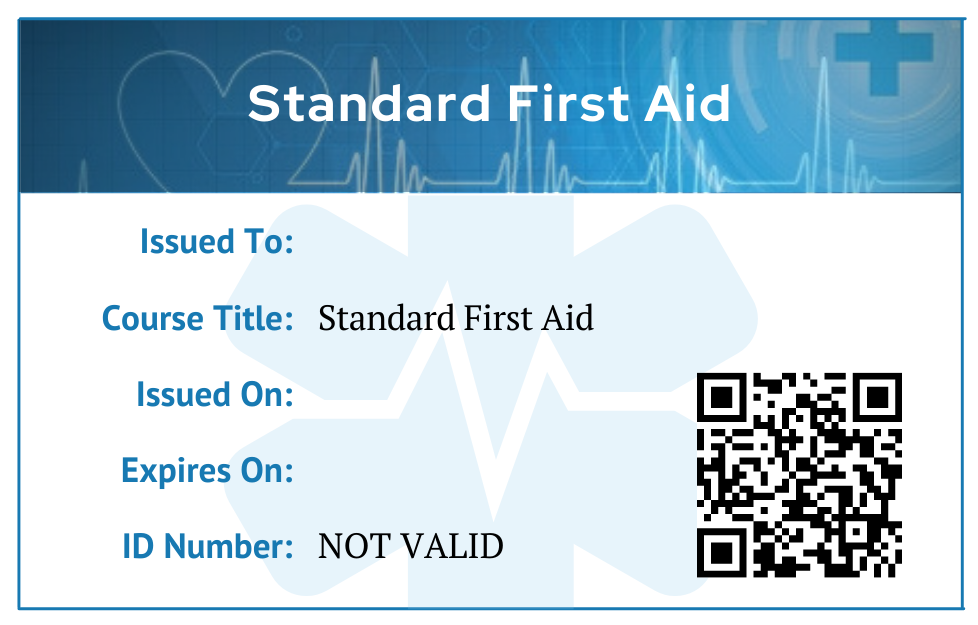
- Based on 2020 AHA© CPR & ECC guidelines
- Accepted in all 50 states and around the world
- Suitable for initial certification or re-certification
- Instantly accessible, QR-verifiable certification card
- No registration or signup required
- Multi-platform access from any type of device
- Certification card valid for 2 years from date of issue
- No additional software to download or install
- Full-color, high-resolution 2-sided certification card
- Unlimited copies of your certification card
- Lifetime 24/7 US-based email support
- 100% guarantee - accepted or your money back!
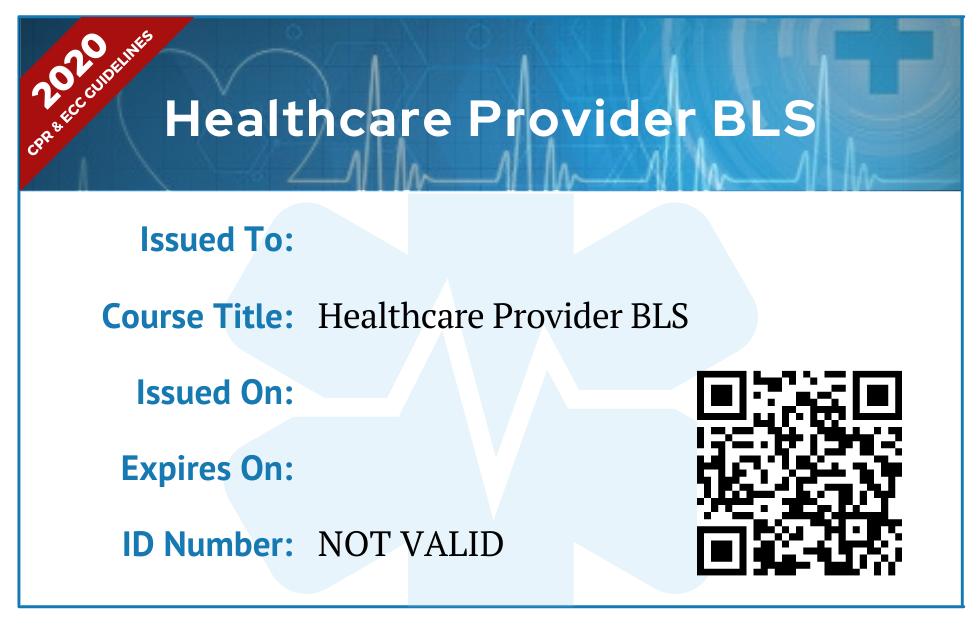
- Based on 2020 AHA© CPR & ECC guidelines
- Accepted in all 50 states and around the world
- Suitable for initial certification or re-certification
- Instantly accessible, QR-verifiable certification card
- No registration or signup required
- Multi-platform access from any type of device
- Certification card valid for 2 years from date of issue
- No additional software to download or install
- Full-color, high-resolution 2-sided certification card
- Unlimited copies of your certification card
- Lifetime 24/7 US-based email support
- 100% guarantee - accepted or your money back!
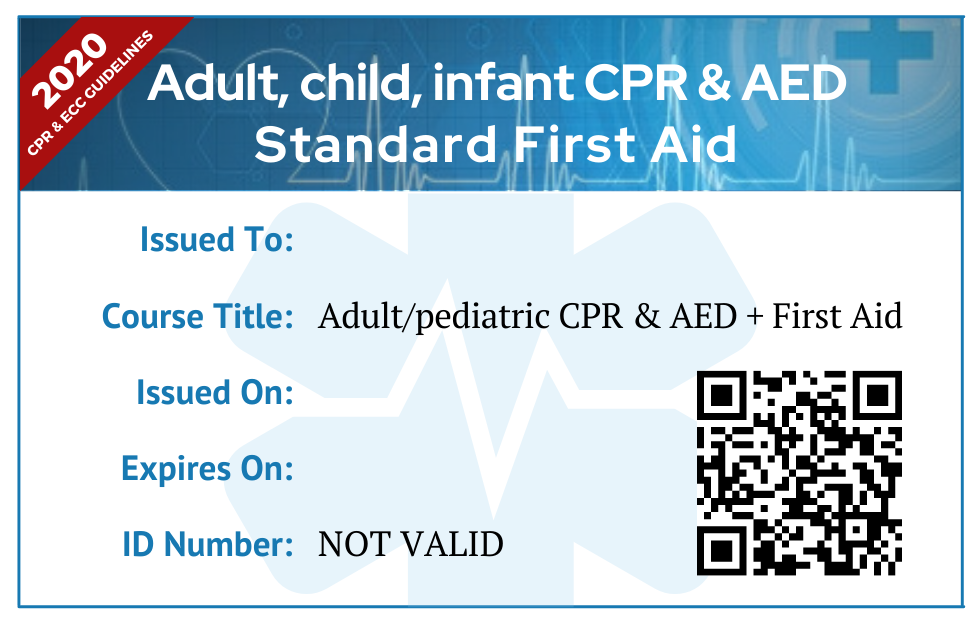
- Based on 2020 AHA© CPR & ECC guidelines
- Accepted in all 50 states and around the world
- Suitable for initial certification or re-certification
- Instantly accessible, QR-verifiable certification card
- No registration or signup required
- Multi-platform access from any type of device
- Certification card valid for 2 years from date of issue
- No additional software to download or install
- Full-color, high-resolution 2-sided certification card
- Unlimited copies of your certification card
- Lifetime 24/7 US-based email support
- 100% guarantee - accepted or your money back!
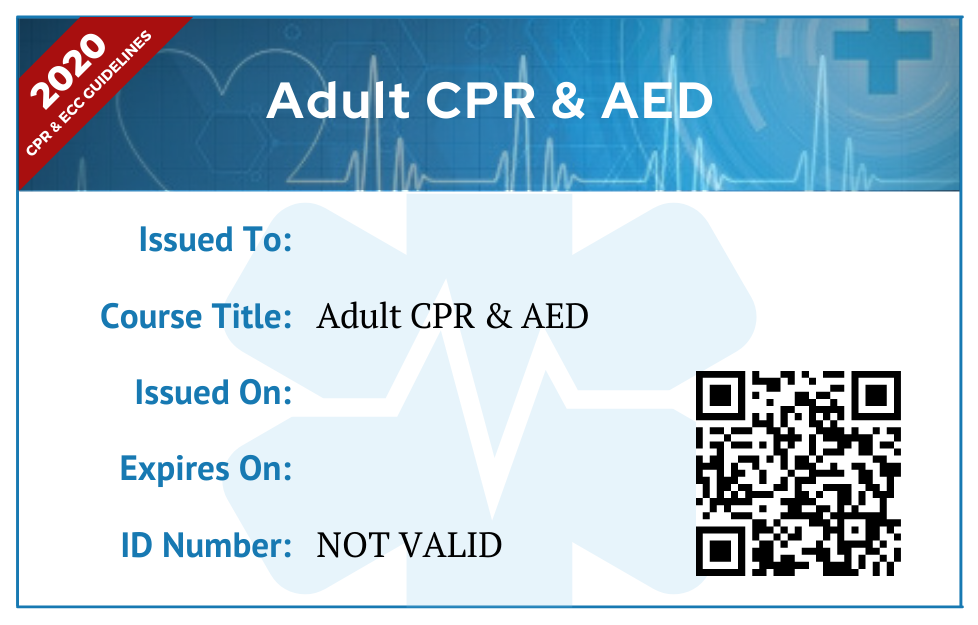
- Based on 2020 AHA© CPR & ECC guidelines
- Accepted in all 50 states and around the world
- Suitable for initial certification or re-certification
- Instantly accessible, QR-verifiable certification card
- No registration or signup required
- Multi-platform access from any type of device
- Certification card valid for 2 years from date of issue
- No additional software to download or install
- Full-color, high-resolution 2-sided certification card
- Unlimited copies of your certification card
- Lifetime 24/7 US-based email support
- 100% guarantee - accepted or your money back!
- Based on 2020 AHA© CPR & ECC guidelines
- Accepted in all 50 states and around the world
- Suitable for initial certification or re-certification
- Instantly accessible, QR-verifiable certification card
- No registration or signup required
- Multi-platform access from any type of device
- Certification card valid for 2 years from date of issue
- No additional software to download or install
- Full-color, high-resolution 2-sided certification card
- Unlimited copies of your certification card
- Lifetime 24/7 US-based email support
- 100% guarantee - accepted or your money back!
April 20, 2024
04/2026
– accepted or your money back! –
100% BEST IN INDUSTRY GUARANTEE
Our guarantee to you is simple: if for any reason our certification card is not accepted by your employer or professional organization, just email us your replacement certification from another facility within 30 days, and we will issue you a full refund. Period. And unlike others, we will never embarrass you by asking to contact your employer.
EXPERIENCE
1
+
Amazing Years
TRACK RECORD
1
K+
Certifications Issued
INTEGRITY
0
%
Worldwide Acceptance
TRUST
0
K+
5-Star Reviews
for your peace of mind
Verify certification
Enter cardholder's name and certification ID number to see status and pertinent details.

SEND US NOTE
We love hearing from you!
Have a question or need tech support? Found an error or a broken link? Or maybe you just want to tell us what we’re doing right or where we can improve. Don’t be shy and let us know 🙂